
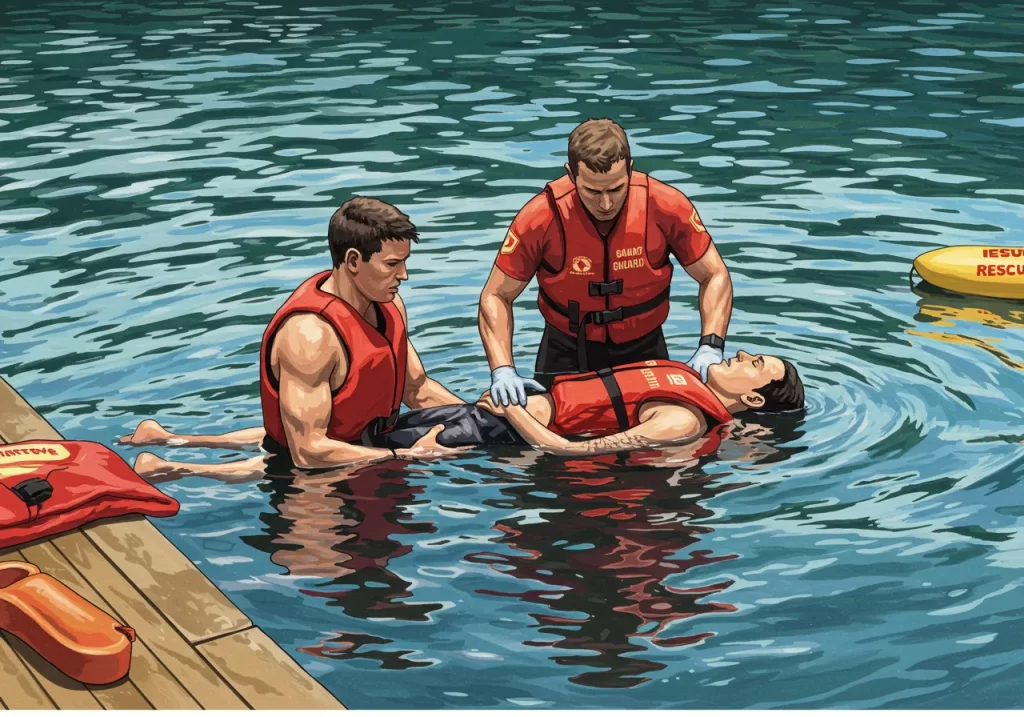
When it comes to CPR training, many people focus on COMPRESSIONS, COMPRESSIONS, COMPRESSIONS. Have you ever wondered why so many people fixate only on the chest compressions over the breaths, especially when water’s involved? Today, let’s clear the air on why those breaths—especially the first ones—could mean the difference between rescue and tragedy.
Why Adequate Breaths Are Important While Performing CPR Especially in Drowning Victims
I’ve been teaching CPR techniques for years now, and one thing that always surprises my students is the difference in approach between standard cardiac arrest and drowning victims. It’s not just about pushing on someone’s chest – those rescue breaths matter a ton, especially in water-related emergencies.
So why are adequate breaths so important during CPR? Simply put, they keep oxygen flowing to the brain. When someone’s heart stops, their blood stops circulating oxygen. The chest compressions help move blood around, but without fresh oxygen from breathing, you’re just pushing around increasingly oxygen-poor blood. Not ideal, right?
For most cardiac arrest situations, current CPR guidelines recommend starting with chest compressions. But drowning victims? That’s different. We actually start with rescue breaths instead.
Why the switch-up? Think about it. In drowning cases, the primary problem isn’t the heart – it’s lack of oxygen. The person couldn’t breathe underwater (obviously), so their oxygen levels plummeted. Their heart might have stopped because of this oxygen deprivation, not because of a heart issue itself.
I’ve found that giving those initial breaths can make a huge difference in survival rates for drowning victims. You’re addressing the root problem first – the oxygen deficit.
The proper breathing technique matters too. When performing rescue breaths, you want to:
1. Tilt the head back to open the airway (unless you suspect a neck injury) 2. Pinch the nose closed 3. Create a seal over their mouth with yours 4. Give two slow breaths, watching for chest rise
Each breath should take about a second, and you should be able to see the chest rise. If it doesn’t, reposition the head and try again.
After those initial breaths for a drowning victim, you’ll move into the standard 30:2 breath-to-compression ratio – that’s 30 chest compressions followed by 2 rescue breaths. Keep this cycle going until help arrives or the person starts breathing.
But honestly, water safety is about prevention first. The best CPR is the one you never have to perform, you know? Always supervise children around water, learn to swim, and avoid alcohol when swimming or boating.

What if you’re worried about giving mouth-to-mouth to a stranger? That’s a common concern. Some people carry pocket masks in their first aid kits for this very reason. But even compression-only CPR is better than no CPR at all.
I think everyone should take a proper CPR course either through the American Red Cross or the American Heart Association. Reading about it helps, but actually practicing on a manikin makes a world of difference. You’ll learn the right depth for compressions and how to deliver adequate breaths effectively.
Remember – in an emergency, doing something is almost always better than doing nothing. Even if your technique isn’t perfect, you could still save someone’s life.
TL;DR: In a nutshell: When someone drowns, the first breaths in CPR matter a lot. Without them, recovery odds drop sharply. Don’t skip that step—especially around water. Learn why, and how you could be the lifesaver someday.